
Technology area
Converting biological resources into new value.
Large quantities of organic material move through agricultural, food-processing, market and industrial systems every day. When they are discarded without recovery, their nutrients and chemical energy are lost, and disposal can create further environmental burdens.
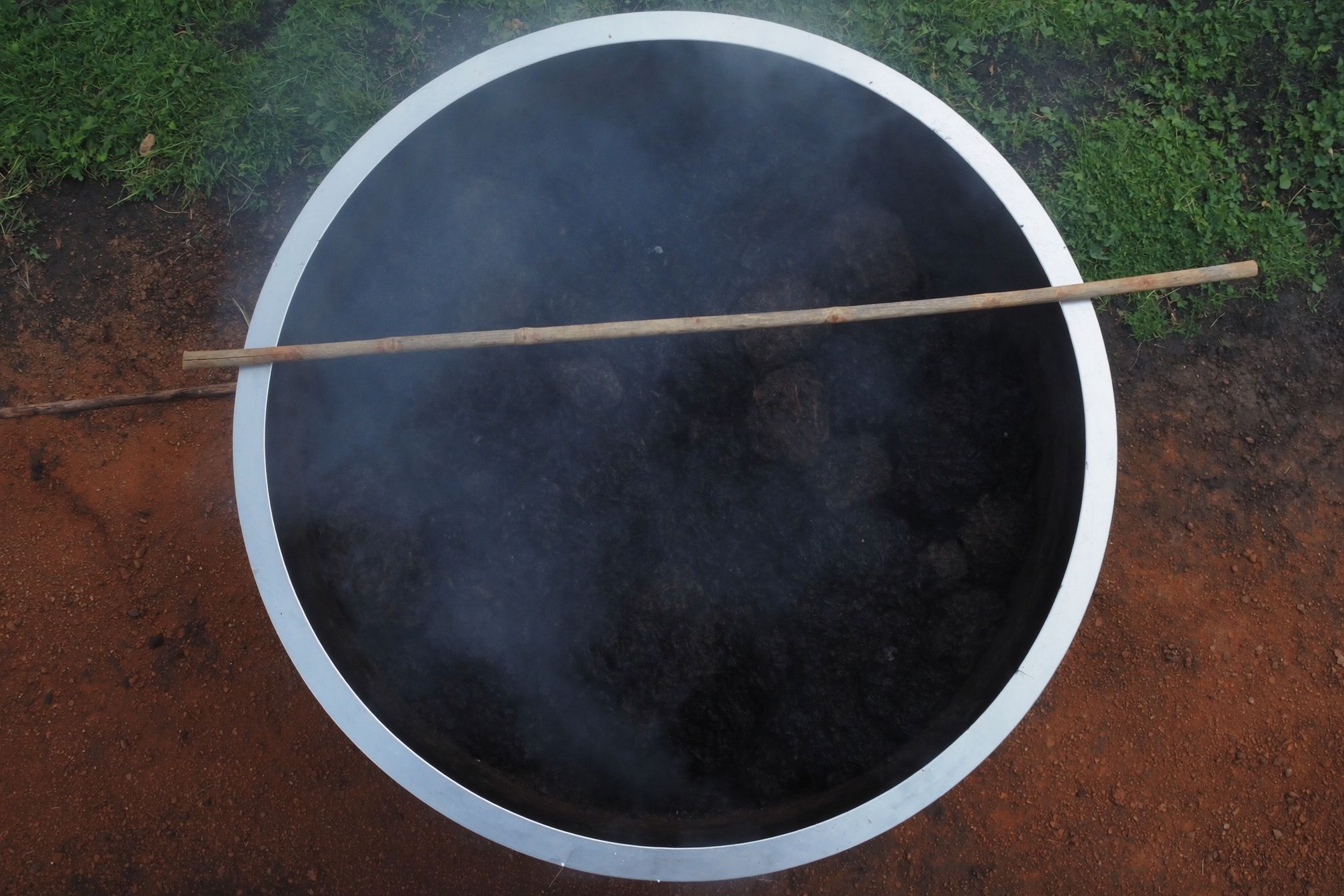
Cyvora's bioconversion technology investigates how biological processes can recover that value. Bioconversion uses living organisms, or the processes they drive, to transform one material into another with greater utility. Depending on the feedstock and the intended output, that can mean microbial degradation, fermentation, stabilisation, nutrient recovery or another biological transformation.
Our approach begins with understanding the feedstock. Organic materials differ substantially in moisture, carbon content, nitrogen, minerals, acidity, contaminants and biodegradability, and those characteristics determine which biological pathway is appropriate and what can realistically be recovered.
What the work covers
- Feedstock characterisation — determining the physical, chemical and biological properties of incoming organic resources.
- Biological conversion — applying the appropriate microbial or biological processes to break down, stabilise or transform the material.
- Nutrient recovery — recovering nitrogen, phosphorus, organic matter and other useful components where that is technically and economically viable.
- Process control — managing moisture, pH, temperature, aeration, residence time and the other conditions that influence biological conversion.
- Product formulation — converting the resulting biological material into stable products or intermediates for agricultural, energy or industrial use.
Where it is used today
Cyvora™ Biofert is the current application: biological conversion used to turn organic resources into a fertilizer product. The same underlying capability can support future work in resource recovery, bioenergy and other circular biological processes.
The distinction that matters is this. We do not approach organic waste as something to be disposed of more sustainably. We approach it as a feedstock whose biological and chemical value can be recovered — which changes the objective from waste management to resource manufacturing.
Used today for
- Cyvora™ Biofert
Solutions
Where this is applied.
Agriculture & Biofertilizers
Biological inputs for productive and resource-efficient agriculture.
Climate & Circular Bioeconomy
Biological systems for productive utilization of CO₂, and the recovery of underutilized biological resources.
Bioenergy
Biological pathways for converting residual resources into energy-related products.
Build it with us.
We're looking for research institutions, industrial partners and funders to pilot and scale our next technologies.