
Technology
Engineering biology into productive systems.
We combine biological science, process engineering and product development to turn under-used biological resources into materials and products people use.
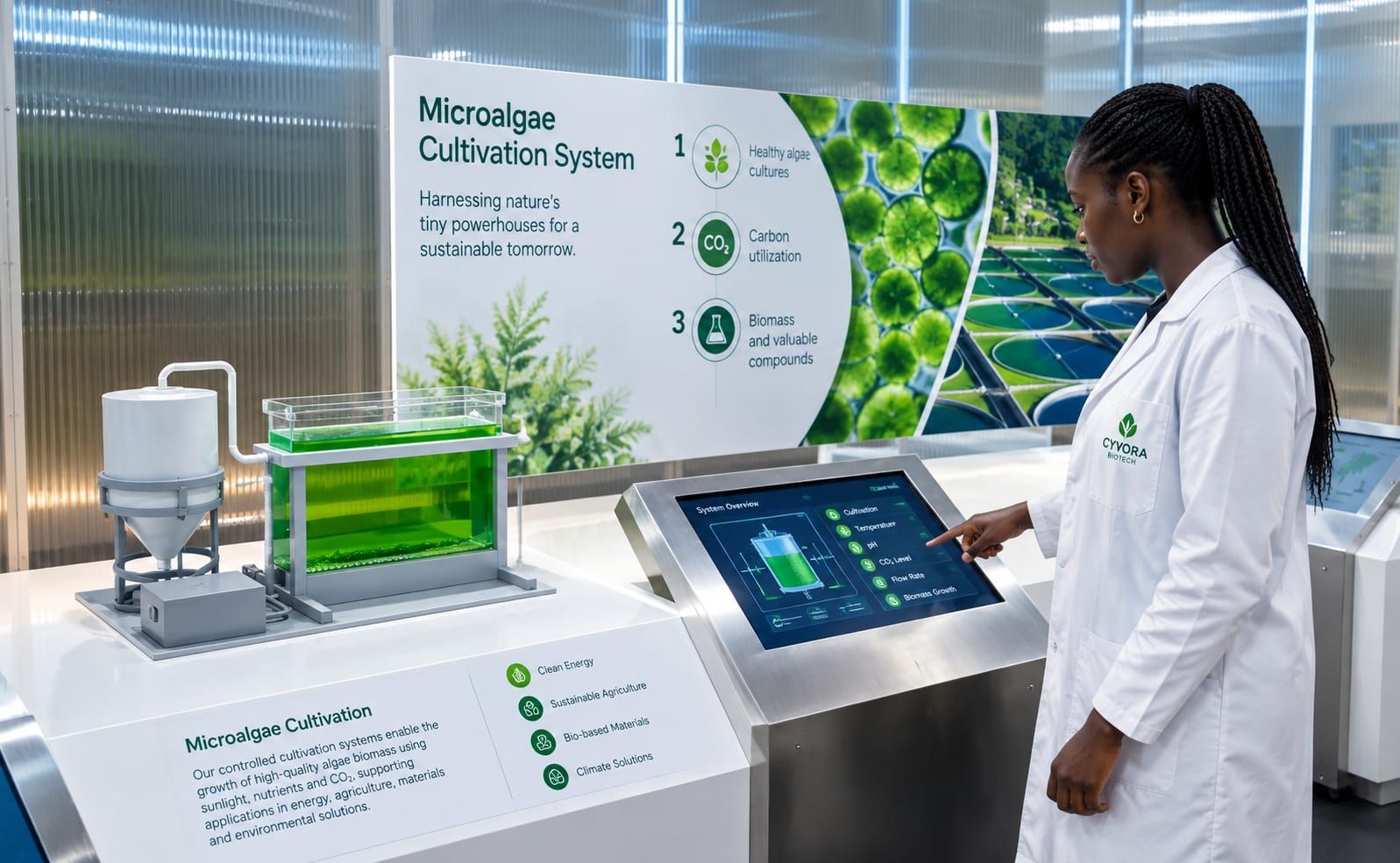
Cyvora Biotech develops biological production technologies that convert under-used resources into biomass, biological compounds and useful products. Our platform brings together algae cultivation, biological conversion, carbon utilisation and downstream processing, connecting environmental resource recovery with agriculture, aquaculture, energy and materials.
The central principle is simple: biology should not only be protected; it can also be engineered, cultivated and integrated into productive systems.
The platform works with several kinds of input — carbon dioxide, organic residues, water, nutrients and sunlight. These are processed through biological systems such as microalgae and microbial processes, generating biomass and other biological outputs that can then be harvested, concentrated, stabilised, formulated or refined further.
Algae is the flagship component, because it provides a biological route for converting light, CO₂ and nutrients into biomass quickly. Depending on the organism and the cultivation conditions, that biomass can contain proteins, lipids, carbohydrates, pigments, minerals and other compounds with commercial applications.
So the platform extends beyond producing algae itself. We are developing the capability to move from cultivation to carbon utilisation, biomass recovery, biorefining and product development — one biological production infrastructure supporting several product streams rather than being tied to one output.
This matters because the world faces climate and resource pressures at the same time. Energy-related CO₂ emissions reached 37.8 gigatonnes in 2024, according to the International Energy Agency's Global Energy Review 2025, while demand for food, animal nutrition and agricultural inputs continues to rise.
Our technology strategy is therefore built around a productive form of resource management: capture biological value, convert it efficiently, recover the useful fractions and return them to the economy.
Our technologies are developed through defined stages, from research and development to validation, piloting, scale-up and commercialisation. We distinguish those stages publicly so that customers, research partners and investors can see what has been demonstrated and what is still being developed.
The platformHow the platform works
Inputs
- Organic waste streams
- Carbon dioxide
- Water and nutrients
- Sunlight
Technology
- Algae cultivation
- Bioconversion
- Carbon utilisation
- Downstream processing
Outputs today
- Bio-fertilizer
- Animal and aquaculture feeds
- Algae biomass
- Aquaponics systems
Outputs in development
- Carbon solutions
- Bioenergy
- Biomaterials
- Monitoring and automation
Each of these is listed in the pipeline.
The circular loopNothing is wasted. Biology keeps the loop moving.
- 01
Organic waste
Food, market and agricultural residues that would otherwise be dumped or burned.
- 02
Biological processing
Microbes break waste down and stabilise it, releasing nutrients.
- 03
Algae and microbial systems
Living systems take up those nutrients, and CO₂, and grow.
- 04
Biomass and bio-based molecules
The harvest: protein, organic matter and useful compounds.
- 05
Products
Fertilizer, feeds, algae biomass today, with more in development.
- 06
Resource recovery
What's left over and what returns from the field re-enters the loop as feedstock.
Our model is built around keeping carbon, nutrients and biological value in productive use for as long as possible, instead of treating them as end-of-life waste.
Technology areasFour technology areas
Controlled cultivation systems for algae and other photosynthetic microorganisms, covering reactor or pond design, nutrient management, harvesting and biomass optimisation.
Used today for
- Cyvora™ Algae
- Cyvora™ Feeds
Biological pathways that use carbon dioxide as an input to productive systems, rather than treating it only as an emission.
Being developed for
- Cyvora Carbon
Microbial and biological processes (such as fermentation and composting) that turn organic waste into stable, useful intermediates and products.
Used today for
- Cyvora™ Biofert
Build it with us.
We're looking for research institutions, industrial partners and funders to pilot and scale our next technologies.