
Cyvora™ Biofert
COMMERCIAL- Discover
- Develop
- Validate
- Pilot
- Scale
- Commercialise
Biological fertilizer from organic waste.
View productResearch & development
Commercially meaningful biotechnology starts with rigorous science. We combine laboratory research, experimentation, pilot validation and partnerships to move promising biological technologies into real-world use.
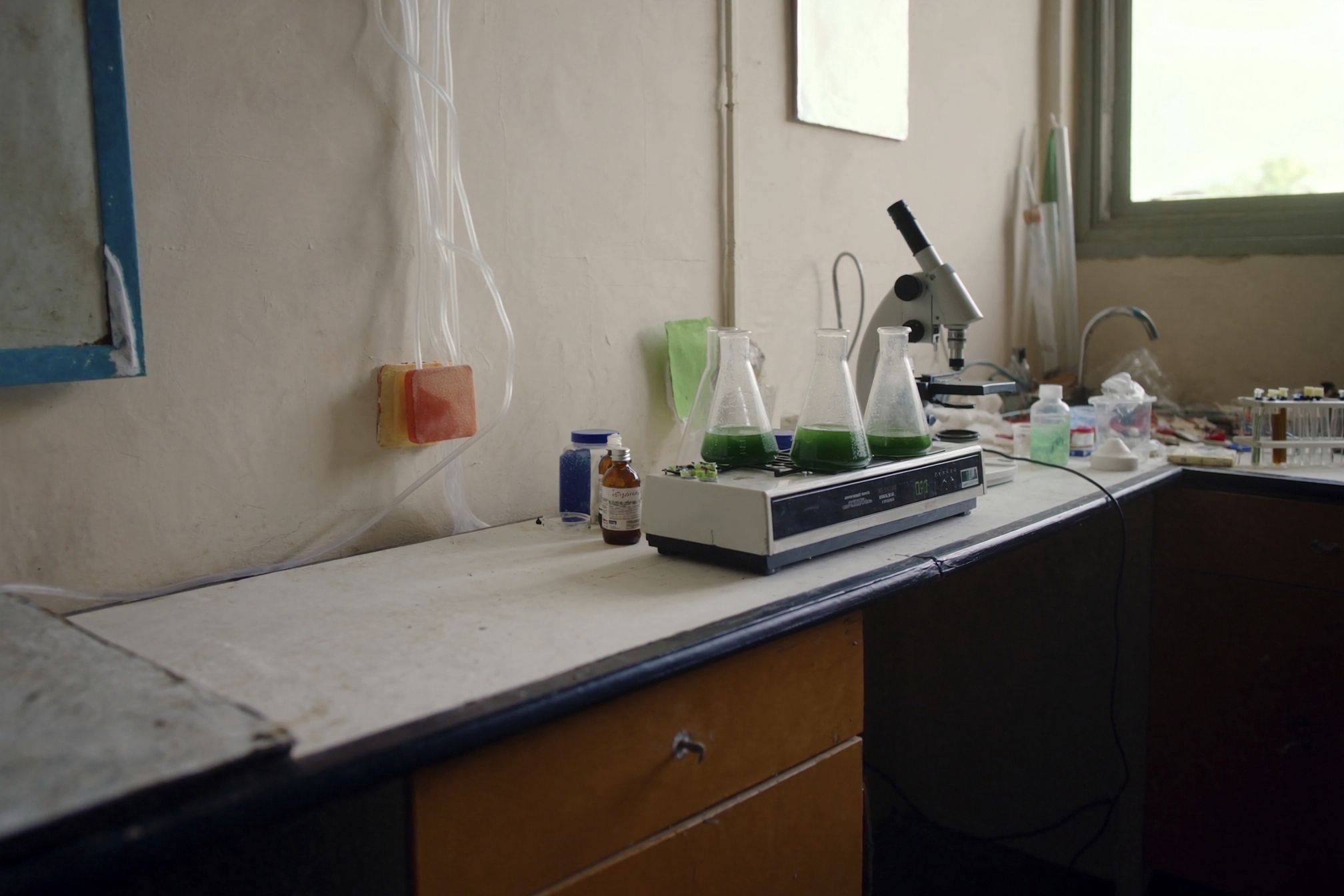
Our technology development is structured around one principle: commercial biotechnology must be supported by reproducible science.
We do not treat every biological idea as a finished technology. Each programme moves through defined development stages, and technical evidence decides when it advances.
Our research spans algae biotechnology, carbon utilisation, biological conversion, biorefining, bioenergy, biomaterials, agricultural biotechnology and integrated food systems.
Improving biological cultivation and biomass productivity.
Developing biological pathways for using CO₂ as a productive input.
Recovering nutrients and biological value from organic resources.
Separating biomass into useful fractions and products.
Converting biological resources into energy-related applications.
Investigating biological alternatives for material applications.
Developing biological inputs for agricultural production.
Combining aquaculture, plant production and biological resource recovery.
Producing biomass is only the beginning. For biotechnology to create commercial value, biological material has to be recovered efficiently, stabilised, characterised and turned into a form that can be stored, transported, formulated and used consistently.
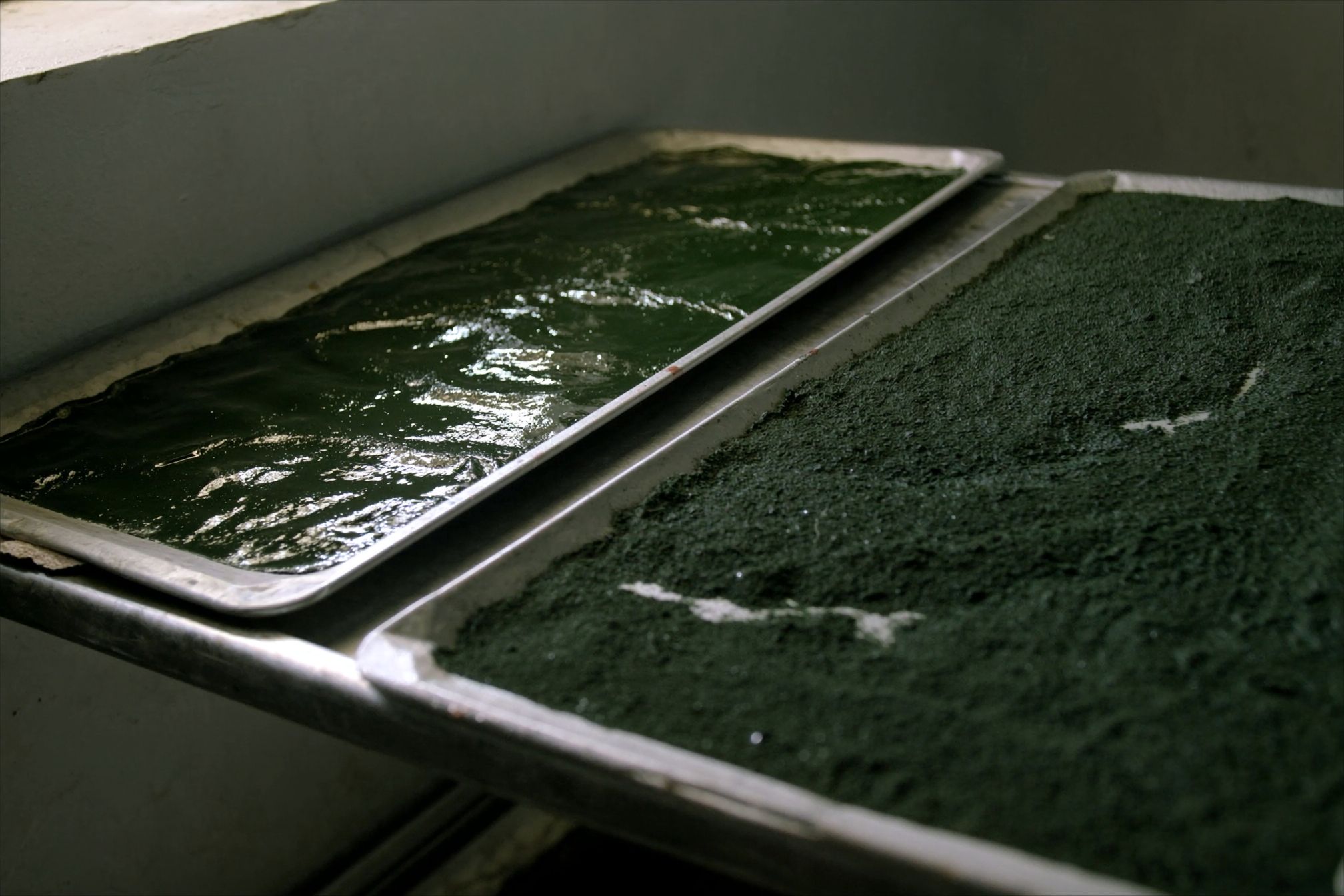
That is the role of downstream processing, and it is where biological cultivation and conversion become usable products and higher-value fractions.
The process begins with harvesting — separating biomass from the cultivation medium or the biological processing environment. Depending on the material, it may then involve:
Biomass does not become a commercial product simply because it has been cultivated. We therefore treat downstream processing as a biomanufacturing capability in its own right.
For algae the opportunity is particularly significant, because a single biomass stream may contain several classes of useful compound — proteins, lipids, carbohydrates, pigments and minerals. How it is processed decides whether that biomass is sold as a relatively simple bulk material or refined into higher-value ingredients.
Drying, formulation and packing are in commercial use today. Extraction, purification and concentration are in development.
The strategic objective is to increase the value recovered from every unit of biological material we produce. The goal is not simply to grow more biomass; it is to recover more value from each unit of it.
Biotechnology does not mature in a single step. A biological process that works in a laboratory may still face substantial challenges around scale, contamination, energy use, equipment, product consistency, economics and market validation. These are the six stages we use.
A biological opportunity is identified and assessed against a real environmental, industrial or market need.
The biological process, organism, feedstock, formulation or system is developed under controlled conditions.
Performance, quality, safety and technical characteristics are tested against defined requirements.
The technology is operated under real or representative conditions, to establish how it performs in practice.
Production capacity, process efficiency, equipment, operating economics and quality systems are optimised.
The technology reaches the market through production, customers, distribution and commercial partnerships.
The pipeline
These are not unrelated ideas. The programmes share the same capabilities — biological cultivation, resource conversion, carbon utilisation, biomass recovery, downstream processing and system monitoring — so as one matures, what it teaches us strengthens the others.
8 programmes
Biological fertilizer from organic waste.
View productFeed from cultivated biomass.
View productAlgae biomass as a raw material.
View productIntegrated fish and plant systems.
Explore aquaponicsBiological carbon capture and utilisation using algae.
Bio-based fuel solutions and fuel additives derived from biological and waste resources.
Bio-based alternatives for packaging, films and membranes.
Monitoring and automation for biological systems: sensors and software to track water quality, growth and conditions in cultivation and aquaponics.
We work with universities, research institutes and industry on joint research, pilots and technology development.