
Cyvora Biotech is building biotechnology systems that address environmental challenges while creating productive economic opportunities. Our impact is measured not only by the products we develop, but by the biological infrastructure we establish, the carbon we put to productive use, the resources we recover, the people we employ and train, and the markets we help build.
Building Africa's biological infrastructure
Climate technologies require more than ideas. They require physical systems, technical capability, skilled people and the ability to operate under real-world conditions.
We have established two functional algae cultivation models as the foundation for developing biological carbon utilisation in Uganda. They are being used to investigate the integration of industrial CO₂ with controlled biological cultivation, and the production of useful biomass — which can then enter downstream processing for aquaculture feed ingredients and biofertilizers.
That gives us a platform from which to develop larger and more efficient biological production systems, rather than treating each product as an isolated technology.
Making carbon a biological feedstock
Industrial CO₂ is generally treated as an emission requiring capture, storage or disposal. We are investigating another pathway: using it as a biological input.
Microalgae assimilate CO₂ through photosynthesis while producing biomass containing proteins, lipids, carbohydrates, pigments and minerals. Our carbon-utilisation programme connects that process with downstream applications in agriculture and aquaculture, and gives us somewhere to measure and improve:
- CO₂ delivery and gas transfer
- Biomass productivity
- Cultivation conditions
- Carbon utilisation efficiency
- Harvesting and biomass recovery
- Conversion of biomass into useful products
The programme is at pilot stage. We have not published a tonnage, and will not until the systems have been measured. A number we could not show the working for would not be worth having.
Jobs, skills and the bioeconomy
Our climate work is also an economic development strategy. Building biological production systems creates demand for skills across biotechnology, engineering, agriculture, aquaculture, manufacturing, data, operations and product development.
Cyvora has created more than twenty jobs and technical opportunities so far, and built a multidisciplinary team capable of moving biological technologies from research and experimentation towards commercial production. The model is designed to create openings for young African scientists, technicians, engineers and entrepreneurs in the emerging bioeconomy.
We are also developing practical training programmes, designed for 200 young people, in algae cultivation, biological processing, biomass harvesting, circular biotechnology, bio-based product development, and aquaculture and integrated food systems. The objective is not to teach the theory but to put people in front of the processes a biological production system actually runs on.
More value from what already exists
We apply circular biotechnology to biological resources that are frequently under-used or discarded. Through bioconversion and downstream processing, organic resources become inputs to new production rather than low-value waste streams: organic resources, then biological conversion, then biomass and materials, then formulated products.
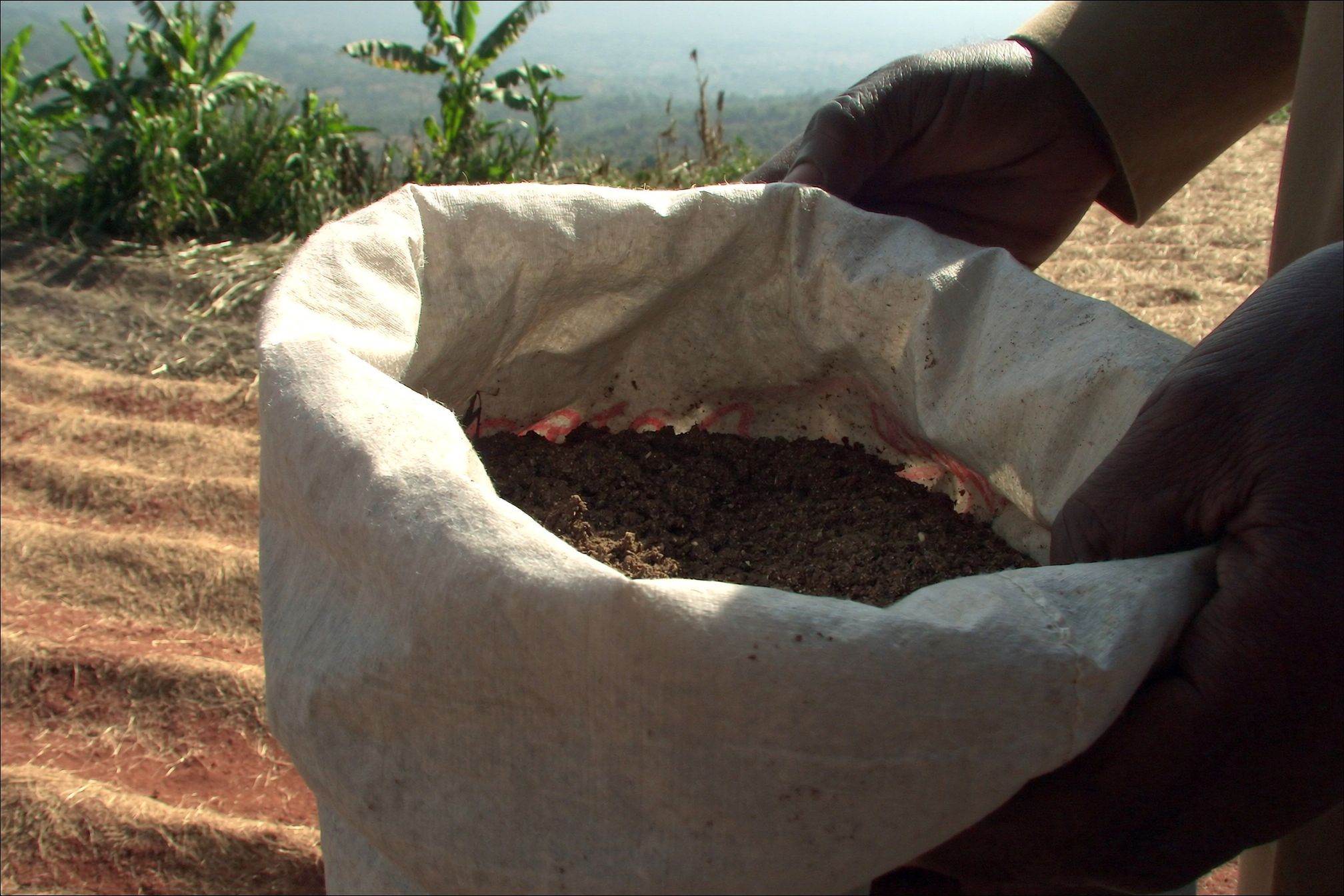
This supports agricultural productivity while reducing dependence on conventional inputs. Our biofertilizer and biomass-based feed pathways are where that connection between environmental resource recovery and a commercial market is already working.
Our impact model
Cyvora's impact sits where climate, biology, industry and livelihoods meet.
- Climate — developing biological pathways for CO₂ utilisation and lower-carbon production.
- Resource efficiency — recovering value from biological resources and under-used biomass.
- Food systems — biofertilizers, aquaculture feeds and integrated production systems.
- Jobs — technical and commercial opportunities in Africa's emerging bioeconomy.
- Skills — practical biotechnology and biological-production capability.
- Industrial innovation — locally adaptable biological technologies, rather than imported systems alone.
From pilot systems to scaled impact
The systems operating today are the foundation for a larger biological manufacturing platform. Our next phase is about increasing cultivation capacity, improving biomass productivity, strengthening downstream processing, quantifying carbon utilisation and widening the range of commercial applications the platform supports.
The ambition is to move from individual pilot systems to repeatable, modular biological production infrastructure that can be deployed across African industrial and agricultural environments.
Climate technology does not have to mean importing finished solutions. It can mean building the scientific capability, the infrastructure, the products and the people required to create them locally.